AI AUTOMATION
AGENCY NZ
We automate the repetitive tasks that fill your team's week, from supplier bills keyed into Xero to enquiries left sitting in an inbox. The systems are built by an Auckland team that runs businesses too.
The Promise
Strategy, build, and support from one team.Automation handled end to end, for businesses ready to grow.
Founder-to-Founder
We work directly with business owners. Kiwi businesses are lean by nature, so we skip the layers and build alongside the people in your organisation who know the job best.
Built for the NZ Ecosystem
Every system is built from scratch around the tools you already use: Xero, MYOB and the platforms your team opens every day. Each integration runs through the software's own API, so nothing gets migrated.
Local Support After Launch
Ongoing support is part of every build. Our office is at 100 Harold Street, Mount Eden, Auckland, so support runs on your time zone, and when a rule needs changing you talk to the people who built it.
What We Automate
for NZ Businesses
We work with New Zealand businesses of 5–200 staff. The work worth automating first is the bottleneck between systems, such as a spreadsheet updated by hand every Friday or a booking copied from one system into another.
Fixed steps run as plain workflows. AI agents take the steps that need judgement, like reading a PDF or answering a caller, and you decide which steps still need a person's approval.
Chatbots on your website answer everyday questions and pass harder ones to your team. A Gisborne law firm cut document collection from 18 days to 8 with automated document requests and reminders, alongside a chatbot that qualifies new enquiries. Our AI solutions by industry pages list what each sector automates first.
Bills and payments: Supplier bills go into Xero or MYOB and overdue accounts get reminders, so the figures are sorted before your GST return goes to IRD.
Enquiries: Each web form and email, including Trade Me enquiry emails, is logged in your CRM and gets a first reply within minutes.
Routing: Jobs and leads go to the right person by type and area.
Reporting: Xero and pipeline figures feed one dashboard, with the week's analytics emailed every Monday.
Calls Answered
Around the Clock
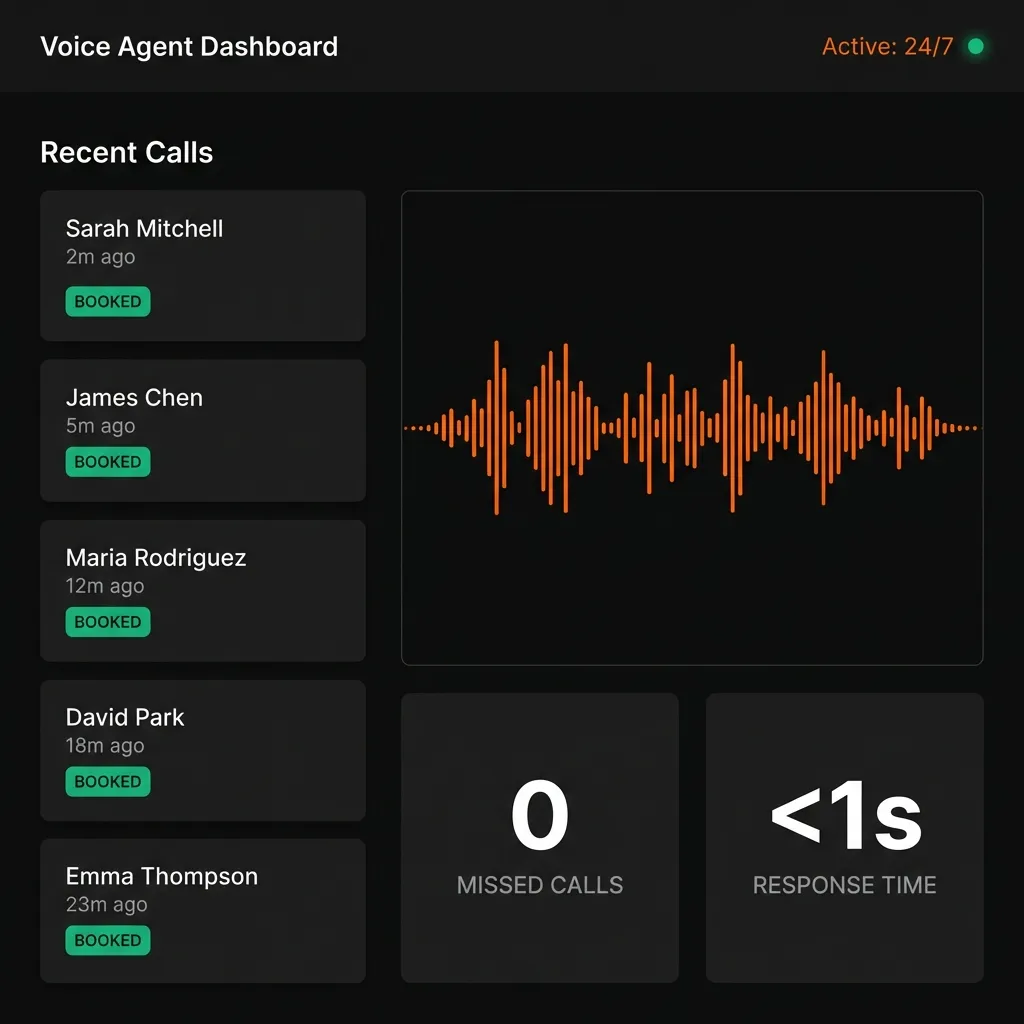
Anyone who rings after 5pm or over a weekend and gets no answer is a lead you lose. Our voice agents answer around the clock, tell each caller they are speaking with an AI assistant, ask your qualifying questions and book the job straight into your calendar. A Hamilton electrician now has 94% of his calls answered, including the ones that used to ring out while he was on site.
Outbound That
Runs Itself.
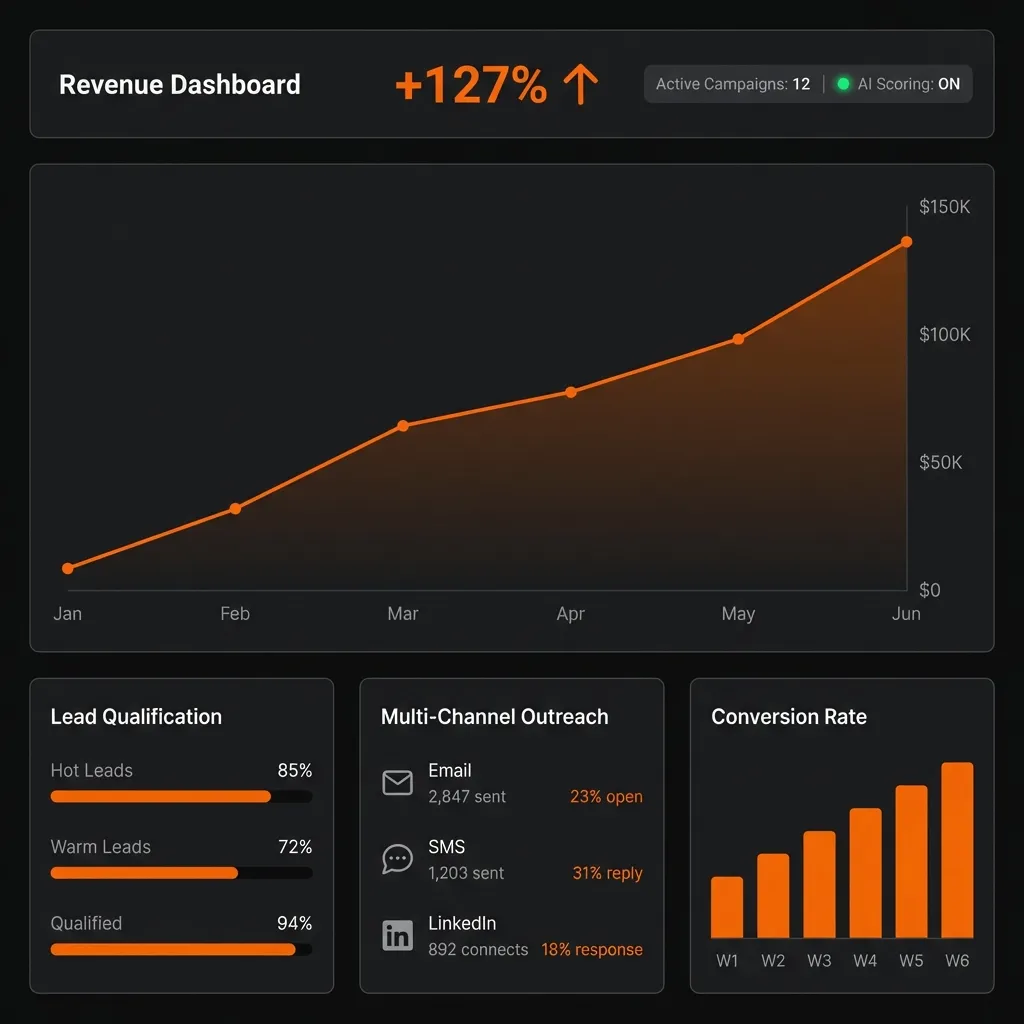
New Zealand is a small market, so a lead nobody follows up is hard to replace. We build outbound systems that find the right prospects, reach out on your behalf and keep following up until each one is ready to talk, and your team does the closing.
Lead Qualification: AI ranks every lead so your team spends time on the prospects most likely to convert.
Multi-Channel Outreach: Coordinated outreach across email, SMS and LinkedIn, personalised to each prospect. Email and SMS sequences go only to contacts you have consent to message, with an unsubscribe in each one, as the Unsolicited Electronic Messages Act 2007 requires.
Know Your Market
Before It Moves.
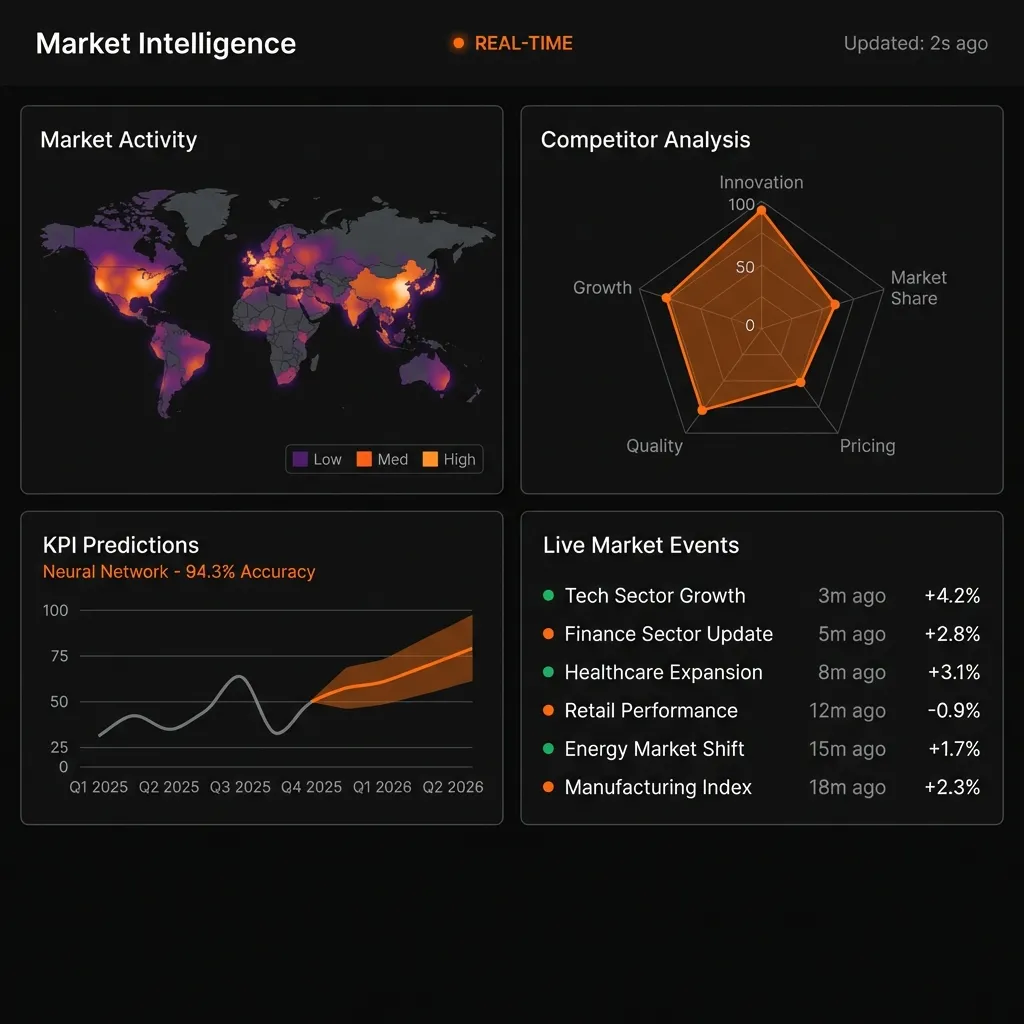
In a market as small as New Zealand, being a week late on a trend can cost you the whole opportunity. Our intelligence agents track competitor pricing, customer sentiment, and market shifts so you can move first.
How We Automate
Your First Workflow
It starts with a free 60-minute consultation, and most systems go live 2–4 weeks after the build starts.
Scope the Job
We map each step with the person who does the job today. You approve the plan and the quote before anything gets built.
Build and Test
We connect your systems through each one's API and add custom AI only where a step needs judgement, then test on your real data beside the old process.
Deploy and Hand Over
We switch it on, train your staff at handover and adjust the rules as real work comes through.
The same process ran for a Christchurch dental practice that brought no-shows down from 20% to around 9%, and for a Tauranga real estate agency that cut its average enquiry response time from 8.5 hours to under 10 minutes. For a plan across the whole business, our AI consultation sets out an AI strategy first.
Frequently Asked Questions
Everything you need to know about our services, implementation, and results.
Traditional automation follows fixed if-then rules. AI adds machine learning and natural language processing, so a system can read an email, a PDF or a phone call, work out what the person wants and pick the next step. Most of our builds use both.
Data entry, document processing, customer emails and calls, appointment scheduling, reporting, invoice processing and lead qualification. Any repetitive job that involves reading plain language or a routine judgement call is a candidate.
Where our case studies tracked time, clients save between 6 and 12 hours a week, depending on the business. The hours came from answering calls, confirmation calls, phone tag and follow-up scheduling.
Yes. We connect CRM platforms such as Salesforce, HubSpot and Zoho, ERP systems, project tools, Slack, Microsoft Teams, Xero, MYOB and QuickBooks through secure APIs, so your data stays in sync.
It depends on how many systems the build connects and whether it needs AI to read documents or answer calls. The free consultation shows where automation fits. The AI Audit then sets the scope and quote, and estimates your payback, before any build starts.
A plain automation runs fixed steps, like copying each new booking into your calendar. Add a step that reads language, such as pulling fields out of a PDF, and you have an AI workflow. An AI agent picks the next step itself: it answers the call, checks your calendar and books the job. We build the simplest option that does the work.
Yes. A small team feels the change fastest. Start with one workflow and add more as you grow.
No. Your team keeps working in the software it already knows while the system runs in the background, and we make any rule changes for you.
It speaks in a natural voice you choose and tells every caller at the start that it is an AI assistant. When a caller asks for a person, it transfers the call to your team.
We build to the Privacy Act 2020 and its Information Privacy Principles, with encryption, role-based access and audit logs. Client data is hosted on servers in Australia and never used to train public models.
Most systems go live 2–4 weeks after the build starts. Larger programmes that span several systems take 6–8 weeks, with the highest-value workflows shipped first.
Payback depends on your volumes. Results vary by business, and the AI Audit estimates yours before any build starts.
Hand the admin
to AI.
Book a free 60-minute consultation. We go through where your team's week goes and show you which jobs to automate first.